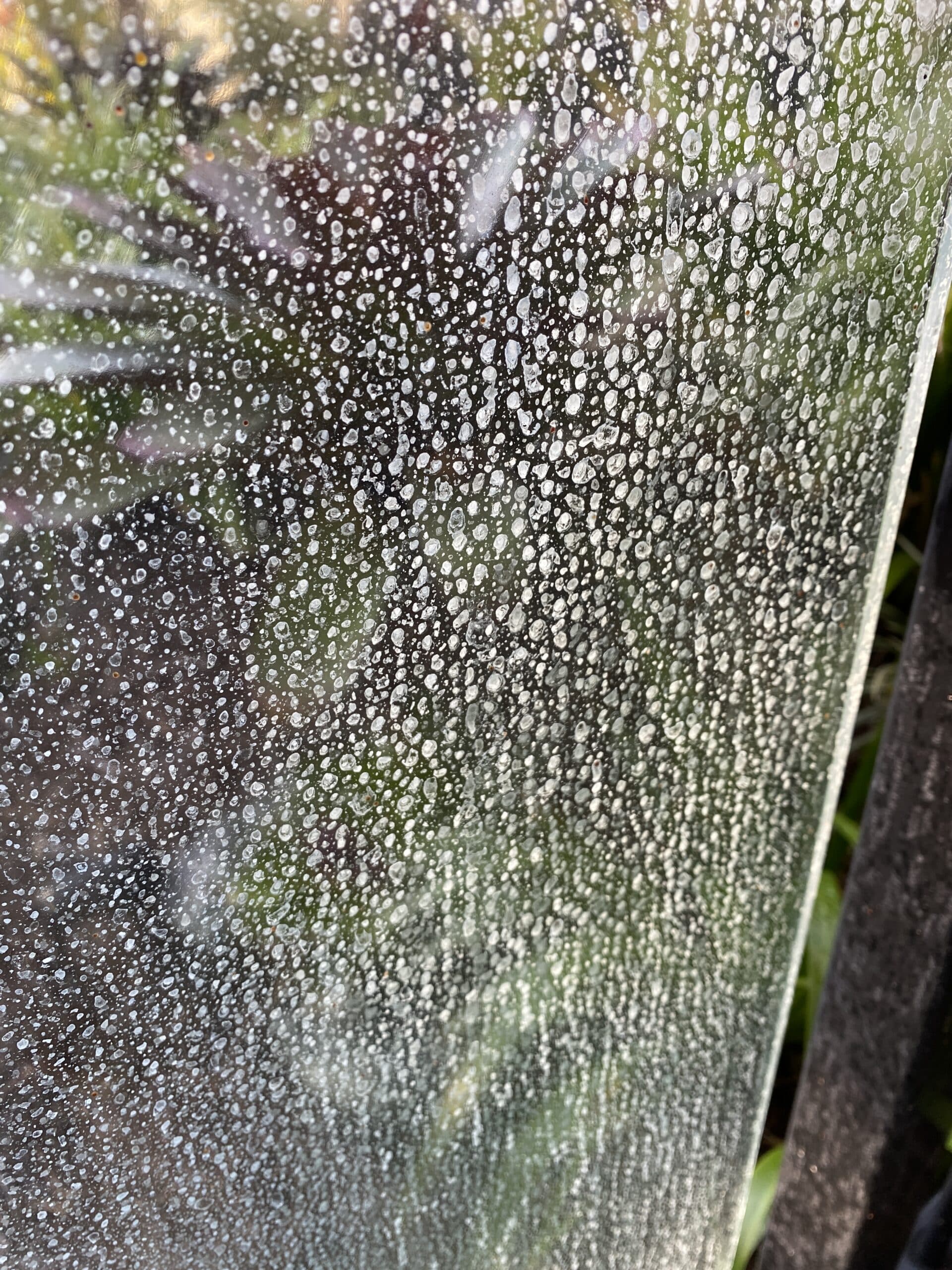
Hard water stains are the chalky, cloudy patches that build up on glass over time. They look a bit like dried soap residue, but unlike soap scum they won't budge with ordinary window cleaner. Left long enough, they etch into the glass permanently. The good news is that with the right approach, most water staining can be removed at home.
What Are Hard Water Stains?
Hard water contains dissolved minerals, mainly calcium and magnesium. When water sits on glass and evaporates, those minerals stay behind as a white or grey deposit. Rain, sprinklers, and even humid condensation can all leave staining over time, especially on north-facing windows that cop the afternoon sun.
In Brisbane, the water supply varies across suburbs. Areas that draw from older infrastructure or rely on tank water tend to see more staining. Homes near garden sprinkler systems are particularly vulnerable, since sprinkler water often hits glass and evaporates repeatedly across a warm Queensland summer.
How to Tell Hard Water Stains from Ordinary Grime
Hard water stains feel slightly rough to the touch and appear as a frosted or hazy layer rather than a smear. They don't wipe away with a damp cloth. If you notice your glass looks foggy even after cleaning, water staining is the likely cause. For a quick test, dampen the area and see if the haze disappears when wet but returns as the glass dries — that confirms mineral deposits.
Method 1: White Vinegar
White vinegar is mildly acidic, which makes it effective at dissolving calcium and magnesium deposits without scratching glass.
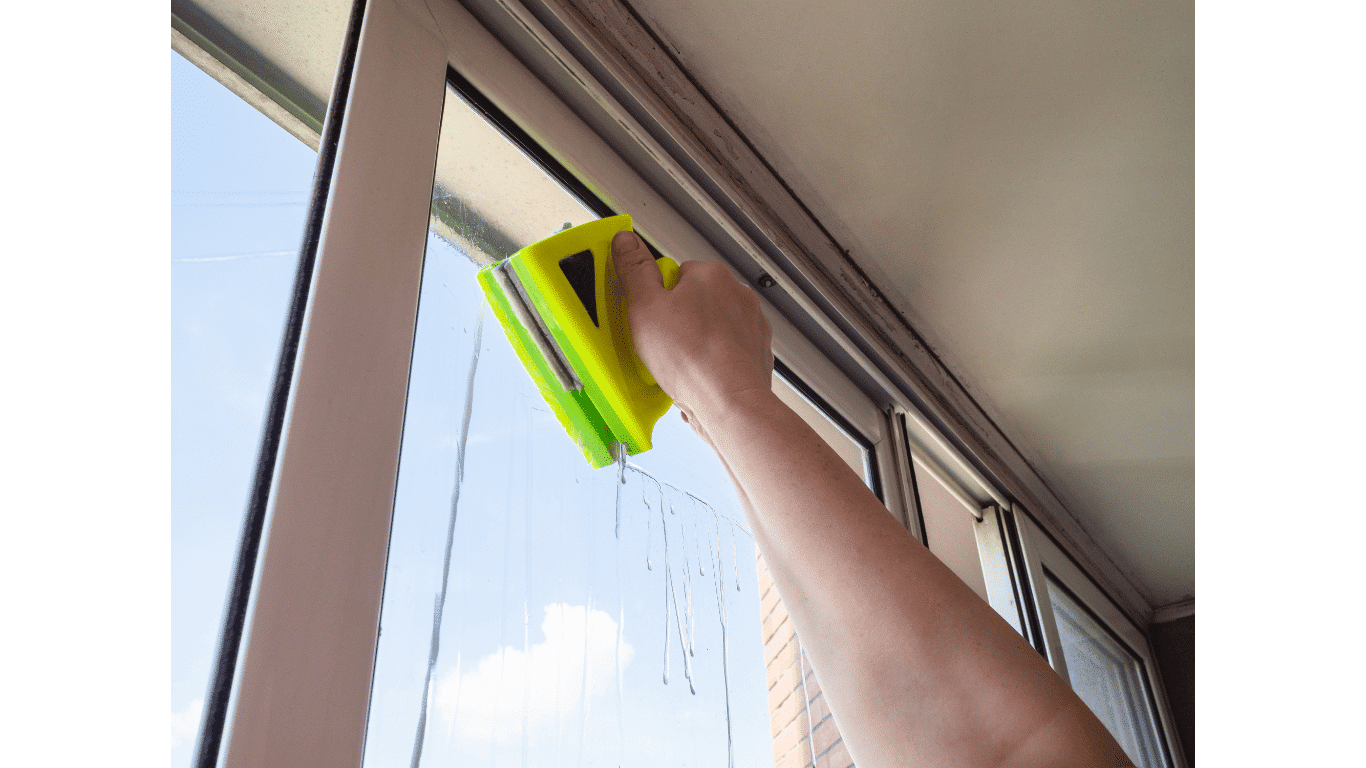
Mix equal parts white vinegar and warm water in a spray bottle. Spray generously onto the affected area and leave it for two to three minutes. For stubborn staining, soak a microfiber cloth in undiluted vinegar and press it flat against the glass for five minutes before wiping. Work in small sections from top to bottom. Rinse with clean water and squeegee dry immediately — leaving water to evaporate will just deposit more minerals.
Method 2: Baking Soda and Lemon Juice
This combination creates a gentle abrasive paste that lifts mineral deposits without scratching the glass surface.
Mix baking soda with enough fresh lemon juice to form a thick paste. Apply to the stained area using a soft cloth and rub in small circles. Leave for five minutes, then rinse thoroughly. This method works well for localised spots that the vinegar spray didn't fully clear.
Method 3: Commercial Mineral Deposit Removers
Products like Bar Keepers Friend or dedicated hard water removers contain oxalic acid, which is more aggressive than vinegar. These work well on older or heavier staining. Always read the label and test a small inconspicuous area first — some products are not suitable for tinted or low-e glass. Wear gloves and ensure good ventilation.
Method 4: Professional Window Cleaning
For severe staining or glass that has not been treated in several years, professional cleaning is the safest option. Professionals have access to polishing compounds and fine abrasive pads that remove etched staining without scratching, as well as purified water systems that prevent new deposits forming during the clean.
If you're in Brisbane and the staining has built up over multiple seasons, our residential window cleaning service includes a hard water stain assessment and treatment as part of the clean.
Preventing Water Stains From Coming Back
Once the glass is clear, a few simple habits keep it that way.
Adjust garden sprinklers so they don't spray directly onto windows. After rain or high humidity, wipe windows down with a dry microfiber cloth before the water evaporates. If you have persistent sprinkler contact, a water softener or filtered irrigation system dramatically reduces mineral content in the water reaching your glass.
For a deeper dive into what's included in a professional clean and how often you should schedule one, see our guide on what window cleaning includes.
Conclusion
Hard water stains are frustrating but not permanent — in most cases. The earlier you treat them, the easier they are to remove. Vinegar and baking soda handle light to moderate staining well. For anything that has been left a while, a commercial remover or professional treatment will deliver better results. Once the glass is clean, small preventive steps keep it looking that way between cleans.
Ready for streak-free windows?
Brisbane's most trusted window cleaning team. Fully insured, 5-star rated, and locally owned by Darren Hoehne.